

Martial arts have been a part of my life for nearly as long as music. It began with Judo in France when I was a kid, but my curiosity later locked onto the elegance and complexity of Japanese weapons systems.
Over the years, I have achieved the following ranks:
I also studied classical koryu styles like Tendo-ryu and Tatsumi-ryu. Today, I continue martial arts as vice-chairman of the International Jukendo Federation and guest professor at the International Budo University.
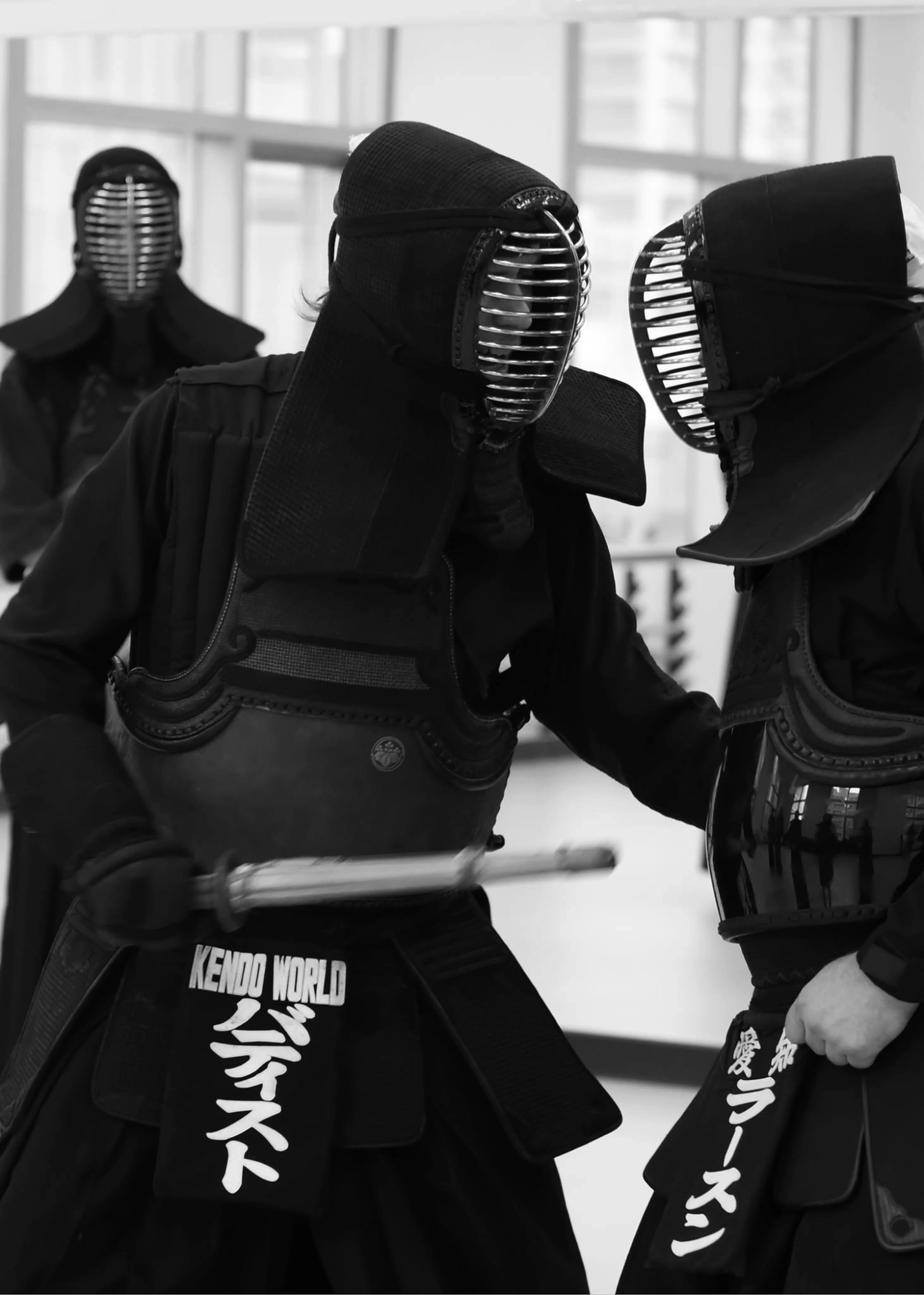
People often ask if martial arts influence my art. The answer is generally: "not sure". Bu in truth it does.
You could say that it ties to Kata. A Kata is a prearranged form—a sequence of movements that has been refined over centuries. In modern practice, Kata can sometimes feel rigid, a loop that stifles expression. But if you look deeper, Kata is an algorithm. It is a set of precise instructions for the body to interact with space and geometry.
This creates a direct parallel to my work with 3D printing and modular design:
Both require absolute precision. A deviation in the angle of the blade, or a deviation in the extrusion of the nozzle, results in failure.
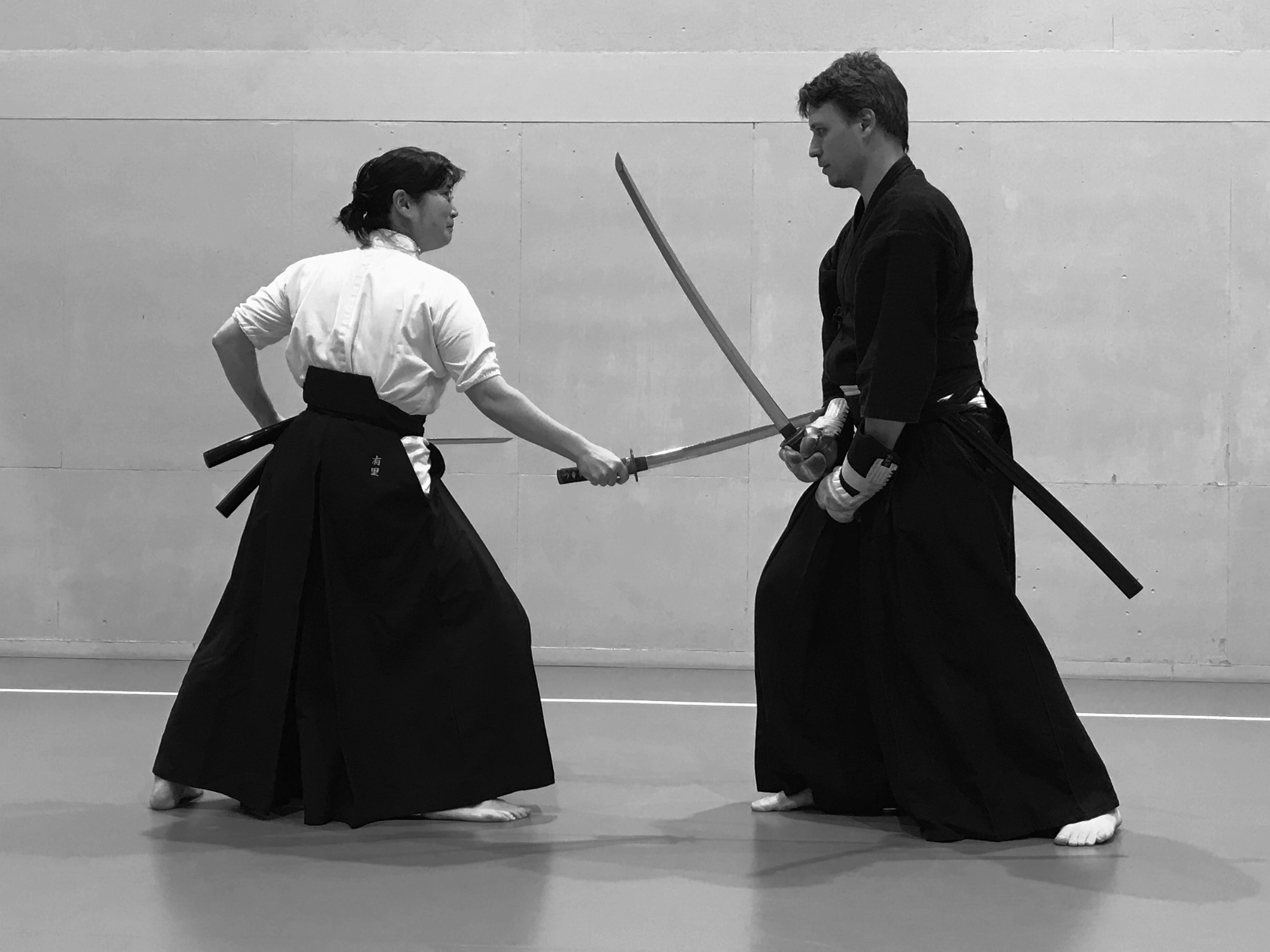
However, that would be a very reductive way of seing things. The most profound connection is of course not technical, but philosophical.
Japanese martial arts are defined by the relentless effort to strip away the superfluous. You distill every technique to its purest essence. If a movement is not necessary, it is removed. If a tension is not useful, it should be released.
This ethos is the source code for my recent works. Early in my career, my drawings were overly complex, filled with "noise." Through the discipline of the blade, I learned the value of the void.
Now, when I design a specimen and its containment unit, I am trying to apply the same logic. I strive for a functional minimalism where the "complex system" emerges from the combination of simple, perfect parts.
The journey is ongoing. Arkhorin’s lore is an expansive system that demands sustained focus to build and maintain. The concept of Zanshin—a state of continuous awareness and follow-through—provides the discipline required to see such a project through over time.
Mastery, whether in the dojo or in the studio, lies not in the complexity of the design, but in the clarity and consistency of its execution.
In an age shaped by AI hallucinations and automated decision-making, Zanshin becomes an essential tool. It reinforces the importance of remaining attentive, critical, and present—never relinquishing control, but continuously checking and verifying AI-generated output (which I use in some parts of my work).